How to Choose the Right Spider Coupling for Your Needs?
Choosing the right spider coupling is essential for effective machinery performance. A spider coupling connects shafts, allowing motion transfer while absorbing shock and misalignment. The selection process is not always straightforward. It involves understanding your equipment's specific needs.
You must consider various factors. These include load capacity, torque, and environmental conditions. A wrong choice could lead to operational issues or equipment failure. There are different types of spider couplings designed for various applications. Each has unique features that can affect performance and durability.
Your specific requirements will guide your choice. Are you dealing with high-speed applications? Or do you require flexibility in misalignment? Identifying these needs can be challenging. However, taking the time to evaluate can save you costly mistakes later. Ultimately, the right spider coupling enhances productivity and extends equipment life.
Understanding the Basics of Spider Couplings and Their Functionality
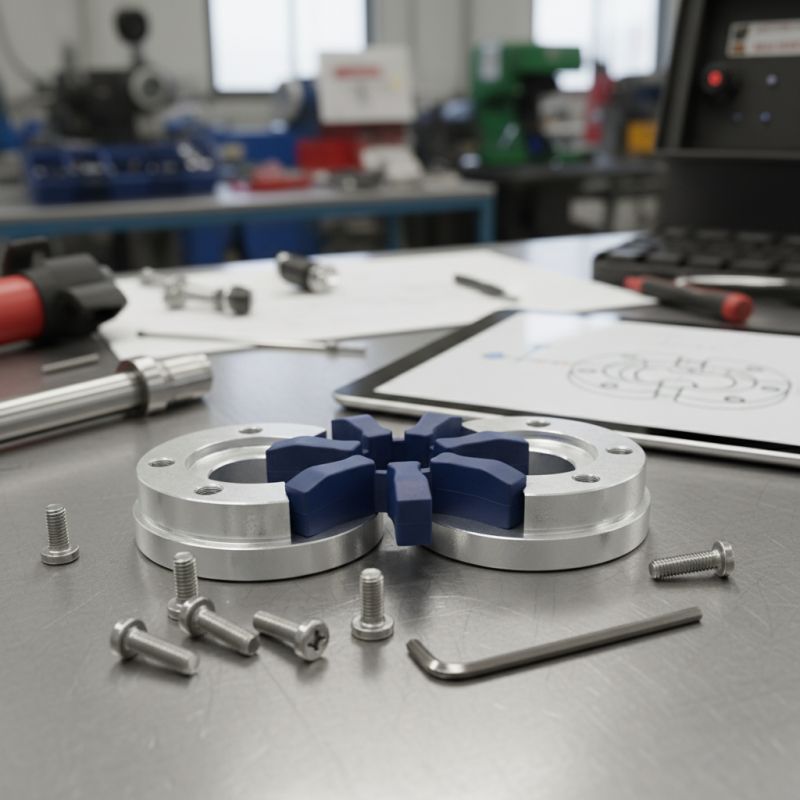
Spider couplings are essential in machinery for connecting shafts. They offer flexibility and damping, reducing vibrations between components. Their design typically includes two metal hubs and a flexible spider in between. This construction enables them to handle misalignment in equipment. Understanding how they work can help in selecting the right type for your needs.
When choosing a spider coupling, consider the operating environment. Factors like temperature and exposure to chemicals can affect performance. For instance, a coupling used in a high-temperature setting may require special materials. A well-suited coupling can significantly improve efficiency and extend equipment life.
Tips: Always double-check the torque ratings. An improper fit can lead to failures. Pay attention to the coupling size too. A mismatch can cause excessive stress. Lastly, consult with a technician if unsure. Getting it wrong can lead to costly mistakes.
Identifying Your Application Requirements for Spider Couplings
Choosing the right spider coupling starts with understanding your specific application needs. Different tasks demand different couplings. Factors like torque, speed, and alignment must be considered. Each of these elements can influence performance and longevity.
Consider the environment where the coupling will function. Harsh conditions may require more robust materials. Vibration levels should also inform your choice. If there is excessive movement, a flexible coupling might be necessary.
Tip: Measure the distance between shafts accurately. This helps ensure proper fit and function.
Assessing load conditions is crucial too. Overloading can lead to premature failure. Look for couplings that offer adequate load capacity while matching the application's unique characteristics.
Tip: Don’t overlook noise levels. Some couplings can reduce noise, enhancing your workspace.
Each application is different. It’s essential to test various options before making a decision. A better fit often leads to superior performance. Be open to adjustments as you gather performance data. This iterative approach may reveal unforeseen advantages.
Evaluating Material Choices for Durability and Performance
When choosing a spider coupling, material selection plays a vital role in durability and performance. Common materials include rubber, polyurethane, and metal. Each material has pros and cons. Rubber offers flexibility but can wear out faster under extreme loads. Polyurethane combines durability with effective shock absorption. Metal, while resistant to high temperatures, can be rigid and may lead to transmission issues.
Consider the environment where the coupling will be used. For example, in high-temperature applications, rubber couplings often fail sooner. A study shows that 70% of failures in industrial settings relate to material incompatibility. This points to the necessity of matching the coupling material with specific work conditions. In marine applications, corrosion resistance becomes essential. Material selection not only impacts performance but maintenance needs as well.
An overlooked factor is load capacity. Many users underestimate the importance of this. A coupling rated for lower loads may break under unexpected strain. Various industry reports reveal that inadequately rated couplings can lead to significant downtime and repair costs. It's crucial to assess both current and future needs. Overreliance on a single material's properties without comprehensive testing may leave companies vulnerable.
Assessing Size and Compatibility with Existing Equipment
When selecting a spider coupling, size and compatibility with existing equipment are crucial factors. Begin by measuring the shaft diameters of your machinery. A proper fit ensures efficiency and reduces wear. If the coupling is too large or small, problems may arise. For instance, an oversize coupling might lead to excessive vibration. This can cause premature failure.
Check the torque requirements as well. Each application demands different torque capacities. Using a coupling with insufficient torque can lead to slippage. On the other hand, using a heavy-duty coupling for low torque may waste resources. Ensure your coupling can handle the maximum load expected.
Be mindful of the mounting configurations too. Some couplings may not fit your current setup without modifications. If adjustments are necessary, consider the time and cost involved. Assessing these elements carefully can save you from future headaches. Sometimes, it’s better to slow down and rethink your choices. After all, a coupling is not just a part—it's integral to your machine's performance.
Considering Maintenance and Lifespan in Your Decision-Making Process
When selecting a spider coupling, maintenance and lifespan are crucial factors. Regular checks can prevent unexpected failures. According to industry reports, properly maintained couplings can last up to 10 years. Neglecting maintenance can lead to reduced performance and premature wear.
It's essential to understand the specific environmental conditions where the coupling will operate. High temperatures and corrosive environments can significantly shorten its lifespan. Not all spider couplings can handle such harsh conditions. Each application may require unique considerations.
Tips: Regular lubrication is key. Ensure that couplings are inspected biannually, focusing on wear patterns. Keep in mind that effective coupling solutions may not be the most complex ones. Sometimes, simpler designs can lead to longer service life. Always reflect on the specific requirements before making a decision.