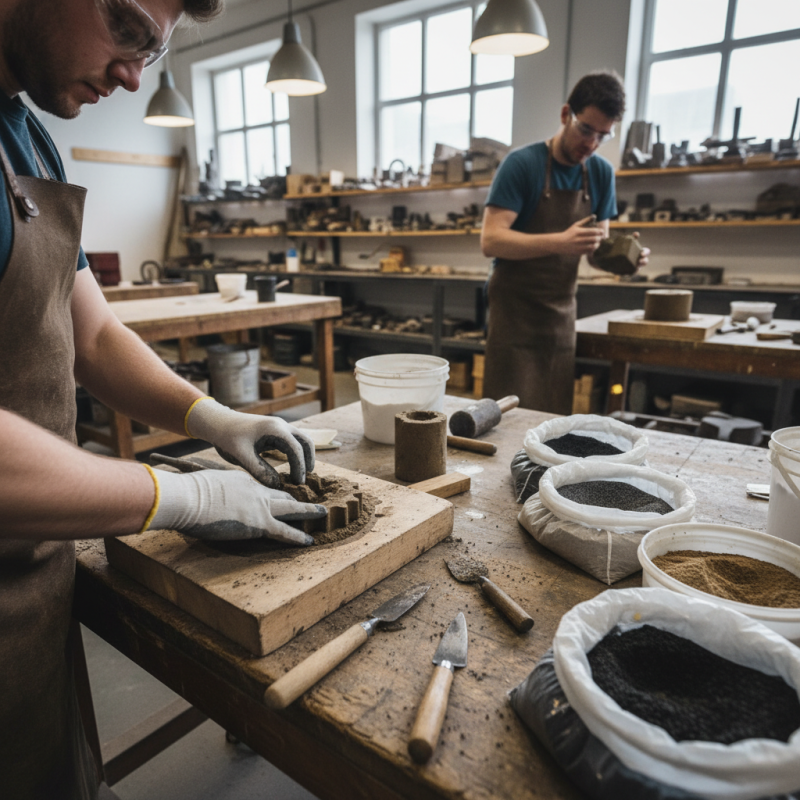
How to Master the Sand Molding Process for Beginners?
The sand molding process is a fascinating technique used in metal casting. It involves creating molds from sand to shape molten metal. For beginners, mastering this process can feel overwhelming, but it offers rewarding outcomes.
To start, you'll need to gather your materials. Quality sand is crucial. It's important to experiment with different sand types. Each type affects the final product's texture and finish. Don't be surprised if your first attempts don’t turn out perfectly. Mistakes are part of the learning experience. Pay attention to how your molds break or hold up, as this will guide your next steps.
Understanding the sand molding process takes time and practice. Each project presents unique challenges. You’ll encounter issues like uneven surfaces or weak molds. Analyzing these problems can lead to better techniques. Embrace the difficulty; it's an integral part of your growth as a creator.
Understanding the Basics of Sand Molding Techniques
Sand molding is an ancient technique. It involves shaping sand into molds for casting metal objects. To get started, it's essential to grasp the fundamentals. Understanding the types of sand is key. Each type has distinct properties affecting the mold's strength and finish.
Tips: Experiment with different sand types. Not all sands are equal. Some are finer, while others are coarser. This can impact the final product’s quality.
Preparation is crucial. Clean the workspace thoroughly. Any debris can ruin the molding process. Use proper tools for compacting the sand. This may require patience. A poorly packed mold leads to defects.
Tips: Don’t rush your packing. Take extra care to ensure uniformity. Uneven sand can create weak spots.
Finally, watch for imperfections in your molds. They can be hard to spot at first. However, practicing regularly helps identify common mistakes. Learning through trial and error is part of the journey. Embrace the process and keep refining your technique.
Essential Tools and Materials for Sand Molding
When starting with sand molding, having the right tools and materials is crucial. Basic equipment includes sand, a mold box, and a rammer. Sand, ideally a silica or green sand, creates strong molds. In fact, studies show that over 70% of foundry work utilizes sand molds, indicating its effectiveness.
Another essential is the mold box. A sturdy, reusable mold box can ensure uniform shape and structure. Rammers are helpful for packing the sand tightly, enhancing mold durability. It's often overlooked that poorly compacted sand can lead to weak molds. A well-packed mold reduces the risk of defects.
Tips: Always sift your sand to remove clumps. Ensure your mold box is clean and free of debris. Monitor humidity levels; too much moisture can compromise mold integrity. If your molds are failing, reflect on your packing technique. Test different sand types to find what works best for your projects.
Step-by-Step Guide to Preparing Sand for Molding
Preparing sand for molding is crucial in the sand molding process. Choose the right type of sand. Fine sand works well for detailed molds, while coarser sand offers strength. It's essential to sift the sand to remove any lumps. This will create a smooth texture for your mold.
Next, moisture content is key. Too little moisture can lead to weak molds. Too much causes muddy molds. Aim for a balance. Use a spray bottle for even moisture distribution. Knead the sand to ensure the moisture is evenly mixed. This step may take some time. You might find it easier to work with small batches.
After preparing your sand, it's time to compact it. Proper compaction ensures mold integrity. Use a tamper or even your hands. Apply consistent pressure to avoid air pockets. Be mindful of overly soft areas. They can ruin your cast. Reflect on your technique as you go. Keep experimenting with sand ratios and moisture levels. Each iteration improves your skills.
Tips for Creating High-Quality Sand Molds
Creating high-quality sand molds requires attention to detail and proper techniques. Start by selecting the right type of sand. Fine sand mixed with clay can enhance mold strength. According to a 2022 industry report, around 70% of professional mold makers favor this mixture for its durability and stability.
Moisture content is crucial too. Balancing sand and water is essential for producing effective molds. If the mixture is too dry, it will crumble. If it's too wet, it won't hold its shape. Effective molders recommend experimenting with ratios, as findings show that a 3:1 sand-to-water ratio often produces optimal results.
It's also vital to ensure that your mold design is free from sharp edges and undercuts. These features can lead to many failures in the casting process. Lessons learned from professional practices indicate that 40% of beginner errors come from poor mold design. Reflecting on your past molds can help improve future outcomes. Embrace the learning curve; it's a natural part of mastering sand molding.
Common Mistakes to Avoid in the Sand Molding Process
The sand molding process can seem straightforward, but common mistakes can lead to poor outcomes. One major error is improperly compacting the sand. According to industry studies, poor compaction can reduce the strength of the mold by nearly 40%. If your mold collapses, you'll waste time and materials.
Another frequent mistake is inadequate moisture control. Sand that's too dry or too wet fails to hold its shape effectively. Reports indicate that maintaining optimal moisture levels can improve mold strength by up to 25%. Beginners might overlook this detail, thinking it’s unimportant. However, the consistency of your mold directly affects the final product.
Finally, many newcomers neglect to consider the temperature of the molten metal. If the temperature is outside the recommended range, defects may appear. Incorrect temperatures can lead to issues like shrinkage or warping, impacting overall quality. A careful analysis of these factors is crucial. Take time to reflect on your process regularly. Each mistake is a chance to improve your technique.
How to Master the Sand Molding Process for Beginners? - Common Mistakes to Avoid in the Sand Molding Process
| Mistake | Description | Consequence | Prevention Tips |
| Improper Sand Mixing | Not achieving the right sand-to-binder ratio, leading to weak molds. | Mold failure, miscasting, and poor surface finish. | Follow precise mixing guidelines and perform small test batches. |
| Inadequate Venting | Failing to include adequate vents in the mold design can trap air. | Air pockets that can cause defects in the final product. | Incorporate vents to allow trapped air to escape during pouring. |
| Poor Mold Maintenance | Using worn out or damaged molds can affect precision. | Increased scrap rates and inconsistent product quality. | Regularly inspect and repair molds to maintain quality standards. |
| Ignoring Environmental Factors | Not considering temperature and humidity levels affecting sand properties. | Mold instability and casting flaws. | Monitor environmental conditions and adjust the mixing process as needed. |
| Rushing the Process | Over-speeding the packing and curing times, skipping thorough checks. | Increased likelihood of defects and weaker structural integrity. | Allocate enough time for each step, ensuring quality throughout the process. |