How to Master the Sand Molding Process for Better Castings?
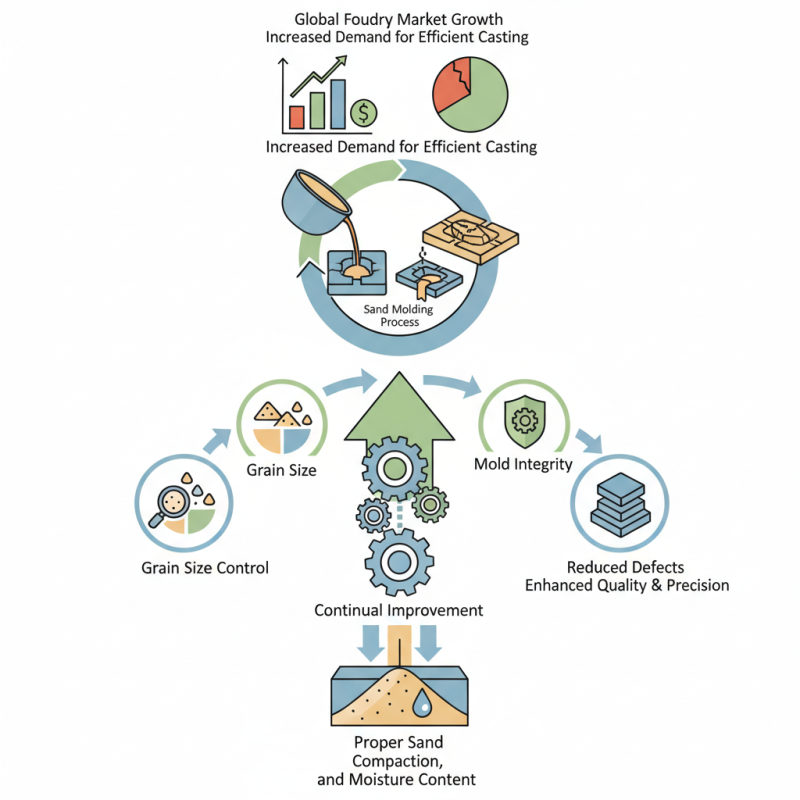
The sand molding process is a critical technique in casting that shapes the future of manufacturing. According to a study by MarketsandMarkets, the global foundry market is estimated to reach $134 billion by 2025. This growth signals an increasing demand for efficient casting methods. However, many manufacturers still face challenges in achieving optimal results.
Employing a reliable sand molding process is essential. It influences both the quality and precision of castings. A significant factor affecting mold integrity is grain size. If not controlled, it can lead to defects in the final product. Research indicates that 28% of castings demonstrate some form of defect.
Understanding the nuances of the sand molding process can lead to improved outcomes. Yet, there are often overlooked aspects to consider. Proper sand preparation, compaction, and moisture content are vital but sometimes neglected. Investing time in refining these areas can significantly reduce waste and enhance overall productivity. In the end, mastering this process requires a commitment to continual improvement.
Understanding the Sand Molding Process: Key Principles and Techniques
The sand molding process is crucial in producing high-quality castings. Understanding its key principles can dramatically improve efficiency. Research shows that nearly 70% of all castings in the manufacturing industry rely on this method. The choice of sand, binder, and additives significantly impacts the final product's quality. Molding sand must be uniform and free from impurities. This is where many shops falter.
Mold preparation is another vital factor. Proper compaction of the sand mix can enhance strength and reduce defects. However, obtaining the right balance of moisture is often overlooked. Too wet, and the mold may deform; too dry, and cracks can appear. A study revealed that inconsistent moisture levels could lead to a 15% increase in scrap rates. Every detail matters, from the grain size of the sand to the temperature of the molten metal.
Many companies underestimate the importance of thorough testing. Regular checks on sand quality can prevent costly mistakes. Moreover, staff training on the molding process is often insufficient. Implementing a robust training program could improve outcomes and reduce waste. Continuous evaluation and adaptation of techniques are essential for mastering the sand molding process. Without this, even minor oversights can lead to significant production issues.
Types of Sand Used in Molding and Their Impact on Casting Quality
When it comes to sand molding, the type of sand can greatly impact the quality of castings. There are various types of sand, each with unique properties. For instance, silica sand is the most common choice. It has a high melting point. This quality helps create durable molds, but it can also lead to issues like sand adhesion on castings.
On the other hand, clay-based sands provide better bonding. They are excellent for producing intricate shapes. However, they can absorb moisture, which sometimes leads to defects. Other options include resin-coated sand, which improves surface finish. Yet, this type can be more expensive. The choice of sand involves weighing these factors against project requirements.
Understanding how each sand type behaves during casting is crucial. An incorrect choice might result in poor surface detail or even casting failures. Experimentation is key, but it can be costly. Mistakes in selecting sand types can lead to time lost and funds wasted. Observing the outcomes of past projects helps refine the sand selection process. In molding, every detail counts, and the right sand can make a significant difference.
Influence of Moisture Content on Sand Properties: Optimizing for Better Castings
The moisture content in sand plays a critical role in the molding process. Understanding this can lead to better castings. Too much moisture can weaken the sand's structure. This may cause defects in the final product. If the moisture is too low, the sand can become too dry. This results in poor molding and inconsistent shapes. Finding the right balance is crucial.
Testing different moisture levels helps. A simple method involves adding small amounts of water and mixing well. Observe how the sand reacts. Is it clumping? Is it easy to shape? These questions guide adjustments. Sometimes, a batch may appear perfect but produces poor results in casting. Reflect on these outcomes.
Flexibility is key. Each sand type behaves differently. What works for one may fail for another. Keep records of your experiments. Identify patterns over time. This process requires patience and observation. Mistakes can be learning opportunities. Adjusting moisture content isn’t always straightforward but optimizing it can lead to more successful castings.
Influence of Moisture Content on Sand Properties for Better Castings
This chart illustrates the relationship between moisture content in sand and molding strength, showing how varying moisture levels can optimize sand properties for better casting outcomes.
Essential Equipment for Sand Molding: Tools and Technology Overview
The sand molding process is crucial for producing high-quality castings. To achieve optimal results, understanding essential equipment is vital. Key tools include molding boxes, rammers, and pattern equipment. Each piece plays a role in shaping and securing molds. Molding boxes need to be sturdy and reliable. They should withstand pressure and maintain shape.
Rammers, often overlooked, are essential for packing sand tightly. Proper use ensures less porosity in castings. Pattern equipment requires exact measurements for precision. Inaccurate patterns may lead to defects. Investing time in selecting the right gear is important.
Technology also impacts sand molding. Automated systems can streamline the process, reducing time and errors. Yet, over-reliance on technology might mask poor craftsmanship. Manual skills should not be neglected. Each piece of equipment has its learning curve. Continuous improvement is necessary. Evaluate processes regularly for better outcomes.
Common Defects in Sand Castings: Prevention Strategies and Solutions
Sand casting is a widely used technique in manufacturing. However, common defects can arise during the process. Understanding these issues is essential for improvement.
One frequent defect is sand inclusion. This occurs when sand particles become trapped in the casting. To prevent this, maintain a clean working environment. Regularly inspect your molds for debris. Additionally, use proper mold release agents to reduce adhesion.
Another issue is porosity, which creates small holes in the final product. Fine sand is helpful to reduce air pockets. Adjusting the moisture content in the sand can also help. Too much moisture leads to steam formation, causing defects. Monitor your mixing process closely to obtain the right consistency.
Reflecting on these challenges is vital. Often, it’s easy to overlook small details, but they can lead to significant issues. Continuous learning and adapting your methods are key to mastering sand molding. Each casting should be a step toward improvement.