What is Spider Coupling and How Does It Work?
spider coupling is an interesting and essential component in machinery. It plays a crucial role in connecting rotating shafts. Understanding its function can enhance mechanical efficiency.
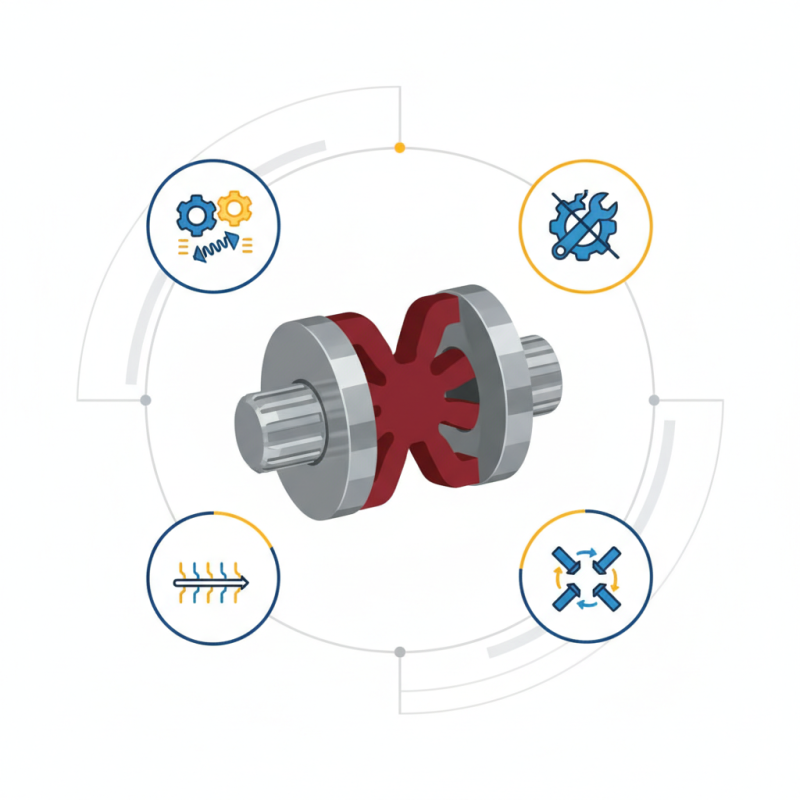
Typically made from flexible materials, spider couplings allow for slight misalignments. This flexibility helps to absorb shocks and vibrations. The design often resembles a spider, with the “legs” extending out to connect both ends. They are simple yet effective.
However, spider couplings may not be perfect. Over time, they can wear out or fail under extreme conditions. Regular maintenance is crucial. Neglecting this can lead to costly breakdowns in machinery. Understanding spider coupling's limits is as important as appreciating its benefits.
What is a Spider Coupling: Definition and Overview
Spider couplings are essential components in various mechanical systems, providing flexible yet efficient power transmission solutions. These couplings consist of two hubs and a flexible spider, typically made from elastomeric materials. The spider absorbs shocks and vibrations while accommodating misalignment between shafts. Reports suggest that the global coupling market is projected to grow at a CAGR of about 4.5% between 2021 and 2026, indicating increasing reliance on such mechanisms.
One interesting aspect of spider couplings is their ease of installation and maintenance. They often require no lubrication, which can save time and costs. However, many users overlook the importance of periodic inspections. Neglecting these checks can lead to premature wear or failure. Regular assessments can enhance the lifespan of the coupling and the entire system.
When considering spider couplings, check the material and design specifications suited for your application. Each coupling type has a maximum torque rating and operational speed limitations. It’s crucial to match these parameters with your equipment's requirements. Remember, failures can disrupt operations and incur significant costs. So, assess your needs thoroughly before making a choice.
The Key Components of Spider Couplings Explained
Spider couplings are essential in various mechanical systems. They are designed to connect shafts while allowing some degree of misalignment. This flexibility is crucial for maintaining the efficiency of machinery. A spider coupling consists of three main components: two metal hubs and a flexible elastomeric spider element.
The metal hubs are responsible for connecting to the shafts. They provide the strength needed to transmit torque. The elastomeric spider, situated between the hubs, absorbs shock and vibration. This minimizes wear on the machinery. Different spider materials offer varying levels of flexibility and durability. Thus, selecting the appropriate material is critical for specific applications.
Installation can be tricky. Aligning the hubs properly is essential for optimal performance. Even slight misalignment can lead to premature failure. Regular maintenance checks can help identify issues early on. Observing wear patterns on the spider could indicate the need for replacement. Such preventive measures ensure that machinery runs smoothly without unexpected downtimes.
How Spider Couplings Function in Power Transmission Systems
Spider couplings play a crucial role in power transmission systems. These mechanical components connect rotating shafts while accommodating misalignment. In industries where efficiency is vital, spider couplings prove essential for minimizing energy loss. Research indicates that proper coupling can improve system performance by up to 30%. This statistic emphasizes the need for effective coupling solutions.
Functionally, spider couplings consist of two hubs and an elastic element. The elastic element absorbs shock and dampens vibrations during operation. Such features are vital in high-torque applications. For instance, in automotive and industrial machinery, failure to select the right coupling can lead to costly downtimes. A study reported that over 20% of equipment failures stem from poor coupling choices.
Misalignment is a common issue many face. Manufacturers often overlook this problem, resulting in uneven wear. Regular maintenance can prevent these complications. Yet, many industries still neglect this aspect, leading to reduced performance. Addressing these factors is essential for sustaining productivity in power transmission systems.
Spider Couplings Performance in Power Transmission Systems
This chart illustrates the performance metrics of spider couplings in power transmission systems. The metrics include torque, speed, efficiency, and vibration level, which are crucial for evaluating the effectiveness and reliability of spider couplings in various applications.
Applications of Spider Couplings Across Various Industries
Spider couplings are vital in various industries due to their flexibility and efficiency. These couplings can accommodate misalignment and absorb shock, which is crucial in many applications. In manufacturing, they connect motors to gearboxes. This connection helps in reducing vibrations that can damage machinery.
In the automotive sector, spider couplings play a key role in power transmission. They enhance the reliability of drivetrains. A well-functioning coupling ensures smooth operation and can prevent costly repairs. These components are often overlooked until issues arise.
Moreover, in the renewable energy sector, spider couplings assist in wind turbines. They help transfer power from the turbine to the generator. Even in robotic systems, these couplings contribute to precise movements. Despite their importance, many users fail to perform regular maintenance. This oversight can lead to unexpected failures and downtime.
What is Spider Coupling and How Does It Work? - Applications of Spider Couplings Across Various Industries
| Industry | Application | Coupling Type | Benefits |
| Manufacturing | Power transmission for machinery | Flexible Spider Coupling | Shock absorption, vibration reduction |
| Automotive | Drive systems and engine mounts | Rigid Spider Coupling | High torque transmission, robust performance |
| Aerospace | Rotor and engine fittings | Heavy-Duty Spider Coupling | Lightweight, high-strength |
| Oil & Gas | Pump and compressor connections | Environmental Spider Coupling | Resistant to harsh chemicals, durability |
| Mining | Conveyor systems | High Torque Spider Coupling | Enhanced load capacity, reliability |
Advantages and Limitations of Using Spider Couplings in Engineering
Spider couplings are known for their flexibility and ability to accommodate misalignment. They consist of two hubs and a flexible spider insert. The insert typically absorbs shock and vibration, which is crucial in applications where precision is key. According to recent reports, these couplings are widely used in various sectors, with a market growth expected to be around 5% annually.
However, spider couplings have limitations that engineers must consider. They are generally suitable for low to moderate torque applications. Their flexibility can sometimes lead to performance issues when high torque is required. Data shows that spider couplings may wear faster in challenging environments, which can lead to increased maintenance costs.
While they are a popular choice for their advantages, engineers should assess specific needs carefully. It’s essential to weigh the benefits of shock absorption against the potential for wear and tear. In high-demand mechanical settings, alternative coupling options may perform better. This evaluation is crucial for optimizing system efficiency and durability.