Top 10 Types of Ball Bearings You Should Know About?
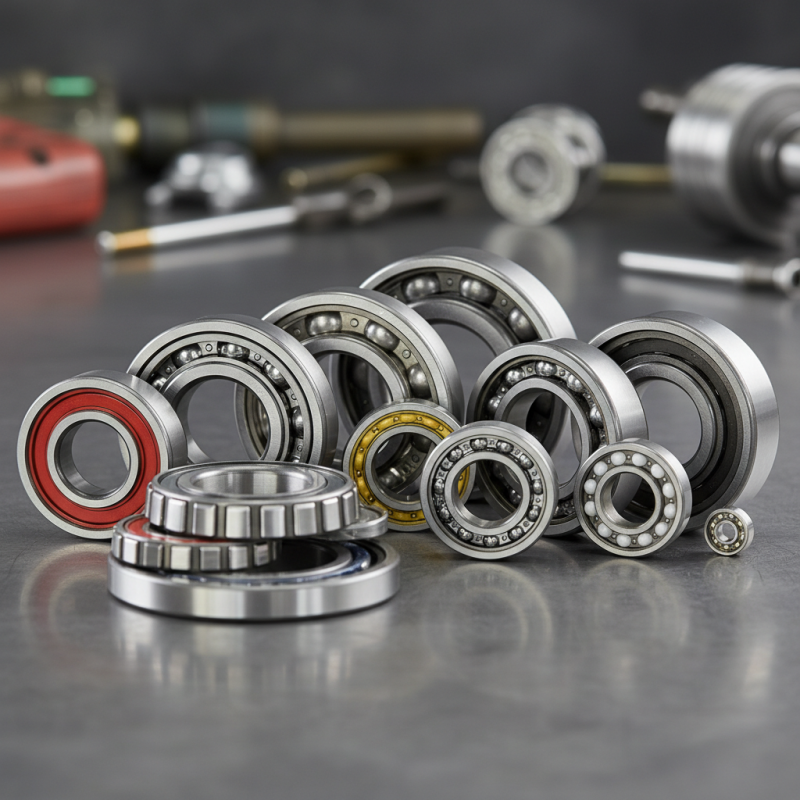
Ball Bearings are vital components in countless machines and devices. Their role in reducing friction is crucial for efficient operation. Understanding various types of ball bearings can help you make informed decisions in your projects.
There are several types of ball bearings, each designed for specific applications. Some excel in high-speed environments, while others serve well under heavy loads. This variety can be confusing, yet essential knowledge for engineers and hobbyists alike.
It's important to explore these types deeply. Each design has its strengths and weaknesses. The wrong choice can lead to failures or subpar performance. Reflecting on the selection process can improve future decisions in ball bearing applications.
Types of Ball Bearings and Their Specific Applications
Ball bearings play a crucial role in various machines and applications. They reduce friction, support radial and axial loads, and help maintain smooth operation. According to a report by Grand View Research, the global ball bearing market was valued at over $22 billion in 2020. This figure is expected to grow significantly as industries demand more efficient solutions.
Different types of ball bearings serve unique purposes. For example, deep groove ball bearings are widely used in electric motors due to their versatility and high load capacity. In contrast, angular contact ball bearings are preferred in aerospace and automotive sectors. Their design allows for combined loads, making them essential in applications requiring precision and durability. Their complexity, however, can lead to unexpected failures if not correctly installed or maintained.
Another type, self-aligning ball bearings, is beneficial in conveyor systems. They can accommodate misalignment, but this feature may lead to performance issues if the alignment exceeds acceptable limits. Additionally, ceramic ball bearings deliver high performance in extreme conditions, but their cost can be a barrier in some industries. As technology evolves, the demand for specialized bearings continues to rise, highlighting the need for thorough understanding and application.
Top 10 Types of Ball Bearings and Their Applications
The Advantages of Using Ball Bearings in Mechanical Systems
Ball bearings play a crucial role in mechanical systems. They reduce friction between moving parts. This results in smoother operation and less energy loss. The compact design of ball bearings also allows for higher loads within smaller spaces. They come in various types, each suited for specific applications.
Using ball bearings enhances the lifespan of machinery. They help in maintaining accurate alignment. This mitigates wear and tear on components. However, improper installation can lead to failures. In some cases, bearings may require lubrication to function optimally. Neglecting this can create noise or overheating.
Manufacturing practices have improved over the years. Still, inconsistencies in quality exist. It's essential to choose the right type of bearing for your need. Each application might demand a unique solution. Understanding the advantages of ball bearings is a step forward in mechanical design.
Top 10 Types of Ball Bearings You Should Know About
| Type of Bearing | Material | Usage | Benefits |
| Deep Groove Ball Bearing | Steel | General Machinery | High Load Capacity |
| Angular Contact Ball Bearing | Ceramic | High-Speed Applications | Handles Axial Loads |
| Self-Aligning Ball Bearing | Stainless Steel | Automotive | Error Compensation |
| Thrust Ball Bearing | Chrome Steel | Vertical Axes | Space Saving |
| Miniature Ball Bearing | Plastic | Small Devices | Lightweight |
| Double Row Ball Bearing | Alloy Steel | Industrial Equipment | Stability |
| Ball Transfer Unit | Steel | Conveyor Systems | Multi-Directional Movement |
| Spherical Ball Bearing | Bronze | Heavy Machinery | Compensates Misalignment |
| Joint Ball Bearing | Plastic | Robotics | Flexibility |
| High-Speed Ball Bearing | Cobalt | Aircraft | Reduced Friction |
Common Materials Used in Ball Bearings and Their Properties
When it comes to ball bearings, the material used is crucial. Common materials include steel, ceramic, and polymer. Steel bearings are the most popular due to their strength. They resist wear and can handle heavy loads. However, they can rust if not properly maintained.
Ceramic ball bearings offer advantages like low friction and high temperature resistance. They are lighter and don't corrode. But, they are more expensive and can be brittle. Understanding these differences helps in choosing the right bearing for your needs.
Tips: Regular maintenance extends the life of steel bearings. Don't overlook the importance of proper lubrication. For ceramic bearings, be cautious of impacts. Their brittleness can lead to cracks. When selecting materials, always consider your specific application.
How to Select the Right Ball Bearing for Your Needs
Selecting the right ball bearing for your needs can be tricky. You need to consider several factors before making a choice. Start by assessing the load type. Is it radial or axial? Understand how each type affects performance. The bearing's size is also crucial. Sometimes measurements can be tricky. A simple miscalculation can lead to compatibility issues.
Material matters, too. Steel bearings are durable but can rust. Ceramic options are lighter and resistant to corrosion. Each material has its pros and cons. Moreover, pay attention to operating conditions like temperature and environment. Extreme conditions may require specialized bearings. Don't forget about maintenance. Some types need regular greasing, while others are lubricated for life.
Finally, consider your budget. While it may be tempting to opt for the cheapest option, this might be short-sighted. Quality usually comes at a price. Reflect on your long-term needs. It might be worth investing in a higher quality bearing to avoid frequent replacements. Remember that making a wrong choice can lead to performance issues in the long run.
Maintenance Tips for Prolonging the Life of Ball Bearings
Proper maintenance of ball bearings significantly extends their lifespan and performance. Studies indicate that ball bearings can last up to 50% longer with regular care. Regular lubrication is crucial. This helps reduce friction and wear, which can lead to premature failure. Using the right lubricant, based on the application's requirements, is essential. Over-lubrication can be as harmful as under-lubrication, potentially leading to overheating or contamination.
Temperature control is another important factor. Bearings often operate in varying environments. Extreme temperatures can affect the bearing material. The ideal operating range is usually around 20 to 80 degrees Celsius for most applications. Keeping the operating environment clean is equally vital. Dirt and debris can cause significant damage. Regular inspections can identify early signs of wear, such as unusual noises or increased vibration. Monitoring these aspects prevents costly breakdowns and replacements.
Sometimes, companies overlook the need for employee training on proper handling. Knowledge of bearing installation and maintenance can be lacking. A little investment in training can save significant costs related to failures. In a field where 20% of maintenance costs can stem from improper handling, this is critical. A proactive approach can lead to better performance and reduced downtime.