Why Use Desizing Enzymes in Textile Processing?
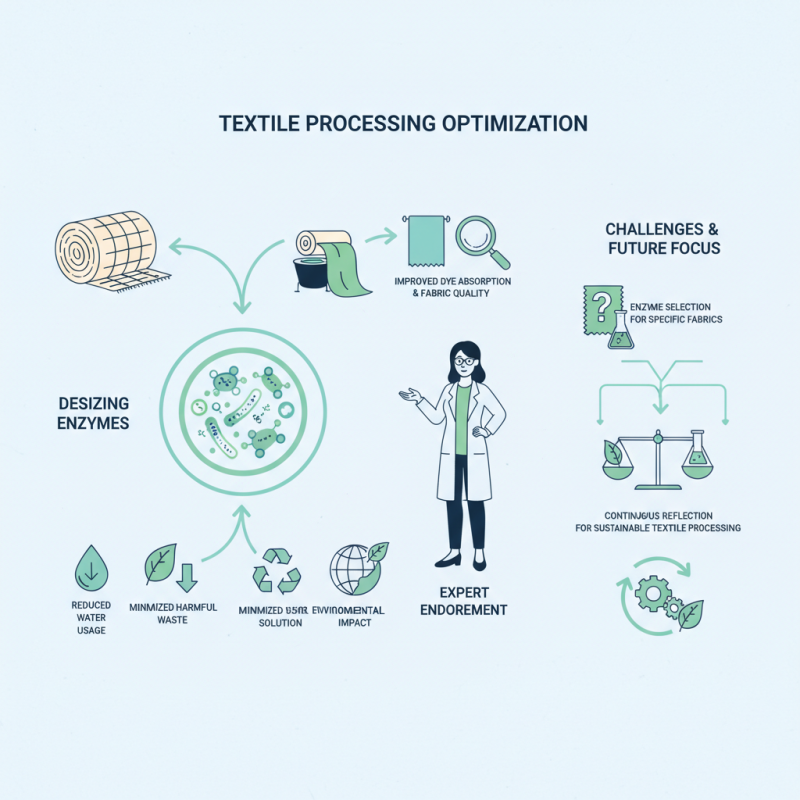
In the textile industry, efficiency and quality are paramount. The use of desizing enzymes has emerged as a vital process in textile processing. Dr. Anna Lee, a leading expert in textile biotechnology, emphasizes the importance of these enzymes by stating, "Desizing enzymes are essential for achieving cleaner and more consistent fabrics."
These natural catalysts break down starches and other sizing agents on raw fabrics, allowing for easier dye absorption and improved fabric quality. Traditional methods involve harsh chemicals. However, desizing enzymes offer a more environmentally friendly solution. They reduce water usage and minimize harmful waste.
Despite their benefits, not all manufacturers fully embrace desizing enzymes. Some remain skeptical about effectiveness. There are challenges, such as selecting the right enzyme for specific fabrics. It’s essential to balance performance and environmental impact. As the industry progresses, continuous reflection on the use of desizing enzymes will be crucial for achieving sustainable textile processing.
Importance of Desizing in Textile Processing
Desizing is a crucial step in textile processing. It removes sizing agents from fabrics, which are applied to improve weaving efficiency. Typically, these agents can cause issues in dyeing and finishing processes if not adequately removed. Research indicates that effective desizing can enhance dye uptake by over 30%. This can lead to more vibrant and consistent colors in finished textiles.
Using desizing enzymes instead of conventional methods can significantly reduce the environmental impact of textile processing. Enzymes can operate under milder conditions, saving energy and water. A report from a textile sustainability organization highlighted that enzymatic desizing has the potential to decrease water consumption by up to 50%. This makes it an attractive option for eco-conscious manufacturers.
However, there are challenges involved in enzyme use. Not all textiles respond uniformly to these treatments. Some have residual agents that complicate enzyme efficiency. Brands using enzymes must continually adjust their techniques to optimize results. This trial-and-error approach can sometimes lead to inconsistent product quality. Striking a balance between efficiency and sustainability is essential, yet often difficult to achieve.
Types of Desizing Enzymes Used in the Industry
Desizing is an essential step in textile processing. It removes sizing agents from woven fabrics, making them ready for dyeing and finishing. Various enzymes are used for this purpose, each designed for specific types of fibers and sizing materials.
Amylases are among the most common desizing enzymes. They target starch-based sizes, breaking them down into simpler sugars. This makes rinsing easier and more efficient. Another type, cellulases, are effective on cellulosic fibers, enhancing the fabric's softness. Pectinases play a crucial role in removing pectin-based sizes, particularly in cotton fabrics.
Tips for effective desizing include proper enzyme concentration. Using too much may lead to fabric damage. Always pre-test a small fabric sample to ensure compatibility. Maintain the right temperature and pH levels during the process for optimum results. Remember, the goal is to achieve clean, soft fabric without compromising its quality. Regularly assessing the outcomes can reveal hidden issues that could affect production.
How Desizing Enzymes Improve Fabric Quality
Desizing enzymes play a crucial role in textile processing. They efficiently remove starch and other sizing agents applied during weaving. This process makes fabric softer and more breathable. Fabrics treated with desizing enzymes feel better against the skin and improve the overall wearing experience.
Improving fabric quality goes beyond mere feel. Enzymes enhance dye uptake, resulting in vibrant colors. This allows for more consistent dyeing, which reduces the chances of color fading. However, users must monitor the enzyme usage carefully. Overuse can lead to premature fabric wear. Each textile's unique composition may respond differently to treatments, requiring adjustments in application.
It is also important to consider environmental impacts. Enzymes are often marketed as eco-friendly options. While they minimize harmful residues, processing leftover chemicals is still necessary. Some cleaning agents may persist in the process. Striking a balance between efficiency and sustainability remains a challenge. Addressing these concerns is integral to advancing fabric quality in the textile industry.
Benefits of Using Enzymes Over Traditional Methods
Desizing enzymes are becoming popular in textile processing. They offer several advantages over traditional methods. One significant benefit is efficiency. Enzymes work quickly to remove size materials from fabrics, saving time and energy. This is crucial in a fast-paced industry where speed often dictates success.
Using enzymes can also be more environmentally friendly. Traditional desizing often requires harsh chemicals, which can harm the ecosystem. In contrast, enzymes are biodegradable. They contribute to a cleaner production process. However, it’s essential to consider the sourcing of these enzymes. Not all enzyme products are created equal. Their effectiveness can vary, and that can impact overall results.
Cost is another concern. While enzymes may reduce water and chemical use, their initial cost might be higher. Manufacturers need to weigh the long-term benefits against immediate expenses. There can be trial-and-error when implementing enzymes. Not every process may yield the desired results right away. Therefore, a careful assessment and adjustment period is necessary for optimal outcomes.
Benefits of Using Desizing Enzymes in Textile Processing
Environmental Impact of Desizing Enzymes in Textiles
Desizing enzymes have gained popularity in textile processing. They effectively remove sizing agents from fabrics. This process is crucial for enhancing fabric quality. However, the environmental consequences cannot be ignored.
The use of these enzymes often leads to reduced water consumption. Traditional desizing methods require significant amounts of water, contributing to waste. Enzymes help in minimizing toxic effluents, making the process more eco-friendly. Yet, this shift may not fully eliminate environmental concerns. Waste products from enzyme production still pose challenges.
Moreover, while desizing enzymes improve efficiency, their production may involve energy-intensive processes. This raises questions about the overall sustainability. The balancing act between using enzymes and their environmental footprint needs careful consideration. The textile industry must strive for solutions that encourage greener practices while maintaining high-quality standards.
Why Use Desizing Enzymes in Textile Processing? - Environmental Impact of Desizing Enzymes in Textiles
| Aspect | Conventional Methods | Desizing Enzymes | Environmental Impact |
| Water Usage | High | Moderate | Reduced water pollution |
| Chemical Waste | High chemical discharge | Low chemical discharge | Less harmful to aquatic life |
| Energy Consumption | High | Moderate | Lower carbon footprint |
| Operational Cost | Higher | Competitive | Cost-effective in the long run |
| Product Quality | Inconsistent | Consistent | Higher quality fabric |